Now in beta

Stop collecting names. Start reliving lives.

Every family tree app gives you the skeleton. Genealogic gives you the flesh: the wars, the famines, the migrations, the small shop on a street that no longer exists.

Scroll
Where it started
"My great-grandfather had a grocery shop in Rotterdam.
Was his street hit in the 1940 bombing?
How did a greengrocer survive the Hunger Winter?"

These questions are answerable. The data exists in city archives, digitised newspapers, and war documentation databases. But the sources are scattered across dozens of institutions, hard to access, and require expertise to interpret.

Genealogic makes the connection. Automatically.
The engine

Three layers.
One story.

01

The structure

A collaborative family tree where every family member contributes. Sources are required per claim. Every edit is traceable. Conflicting information is flagged, never silently overwritten.

02

The context

AI places each person in their historical reality. Occupation + location + year tells us which war they lived through, which economic crisis hit their trade, which epidemic swept their city.

03

The story

A readable narrative built from verified facts and historical inference, clearly distinguished. Not invented. Not generic. Specific to your ancestor's time, place, and life.

A name in a ledger.
A life in the making.

Genealogic scans digitised archives, newspapers, and historical records to place your ancestor in the real world. Not a biography invented by AI. A context built from verified sources.

Every other app
Jan de Vries
1887-1951
Rotterdam, Netherlands
Greengrocer
No further information available.
Genealogic
Jan de Vries
1887-1951
Rotterdam, Netherlands
Greengrocer

Jan's shop on the Gaffeldwarsstraat stood 380 metres from the boundary of the 14 May 1940 firebombing. The street survived, barely. During the Hunger Winter of 1944-45, greengrocers operated under strict rationing cards. Records from the Rotterdam City Archive show a J. de Vries listed among registered food traders on the Zuidplein distribution list, November 1944.

Stadsarchief Rotterdam Delpher 1944 NIOD
The platform

Four ways
to explore

Origin AI intelligence layer

Ask anything about your family — and their world

Origin knows your tree, your documents, and the history of the places your ancestors lived. Ask in plain language: "What happened on my great-grandmother's street during the war?" It answers with documented historical fact, not guesses.

The vision: an archive of every documented human — a living layer of intelligence that connects your family to the full sweep of history. We're building towards it.

Try Origin free →
Core feature

Family Tree

The classic generational view, collaborative and source-linked, built to handle the complexity of real families: adoptions, second marriages, half-siblings.

Network Map

A force-directed graph of every connection: not just the direct line, but in-laws, cousins, witnesses on documents. See the full social network your ancestors lived in.

Geo Map

Where did your family live, and when? Migration lines, location heatmaps by decade, and the question every family asks: why did they leave?

The tech

Bring a portrait to life

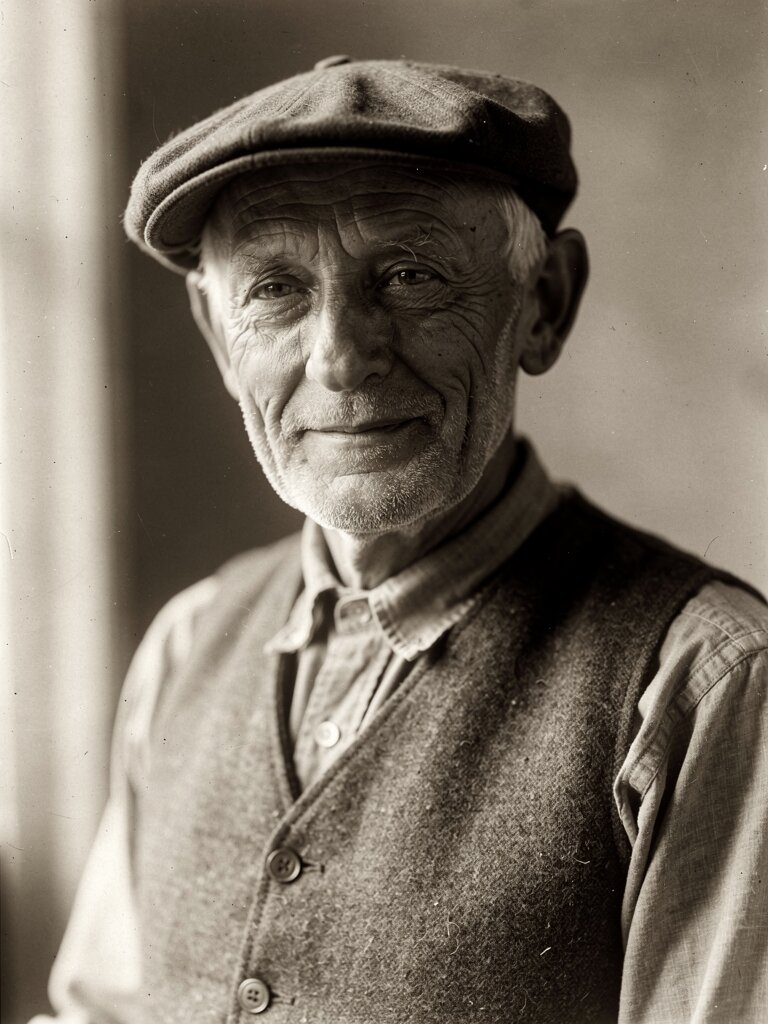
Upload any photograph of an ancestor. On the Family plan, watch a ten-second animation appear: a soft smile, a blink, the wind catching a collar. The original stays untouched. The moving version renders alongside it.

Vintage portrait photograph of an ancestor
Original photograph
Introducing Origin AI

A research agent, not a search box

Every other platform gives you a list of records and sends you hunting. Origin is different: it plans an investigation for a person you pick, searches Wikipedia, Dutch newspaper archives, civil registers and our own Knowledge Graph, cross-references what it finds, and writes you a citable case file — with every missing sibling, unlinked relative, and newspaper obituary surfaced as a proposal you can review in one click.

1
Plan
"Derk van Putten, born 1829 Epe. Parents unknown — civil register should name them. Likely 5–8 siblings per era norm."
2
Investigate
Calls search_kg · search_wikidata · search_wikipedia · search_delpher. Pulls obituaries and bios the user has never seen.
3
Cross-reference
Reconciles conflicting dates across sources. Lower confidence when only one source speaks.
4
Hunt gaps
Identifies missing parents, likely siblings in same-surname cohort, unlinked cousins via shared ancestor.
5
Case file
Writes a citable report. Proposes additions to your tree. You approve with one click.
🔍
Finds what you don't have
Newspaper obituaries, Wikipedia biographies, archive folios — surfaced as clickable sources, not just mentioned.
🧭
Vertical + horizontal gaps
Missing ancestors and likely siblings, spouse families, cousins — across cohort patterns no manual search would find.
🔗
Links to other trees
When a canonical ancestor overlaps another researcher's tree, Origin surfaces it. Competitors can't — we can.
📚
Every claim is cited
Every proposal carries source links + a confidence score. Nothing applies to your tree without your approval.
Try Origin on a person in your tree
Free tier includes 2 research runs / month. Full access on Researcher tier.
The Archive

A journey through the past, built by families.

Every tree added, every document read, every place walked feeds one shared archival world. This isn't a list of features, it's an atlas of lives being restored, one family at a time.

Persons in trees
Places
Eras
Worlds
Documents

See the archive →

The Mysteries Marketplace

Solve mysteries. Earn money.

Every family tree hits a wall — a missing parent, an unreadable scan, a face without a name. Genealogic turns those walls into open leads. Crack them for the thrill, or go pro and get paid for the ones that carry a cash bounty.

For the curious

Solve for the thrill

Browse other researchers' open leads and lend a hand. Earn XP, climb the solver levels, and build a public profile that proves your skill — no subscription required.

Browse open mysteries →
Get paid · Researcher tier

Go pro & earn cash

Claim bountied leads, get paid straight to your bank via Stripe, and wear the Pro Researcher badge that puts your contributions first. Keep more of every bounty with the lowest platform fee.

Become a Researcher →
Simple pricing

Start free.
Go deeper when you're ready.

Free
€0
Try it out
  • 1 tree, up to 50 persons
  • Family tree + timeline views
  • 5 document scans per month
  • Basic historical context
  • 2 Origin AI research runs / month
Start free
Plus
€14.99 /month
or €149.90 / year · save ~17%
For committed family historians
  • Unlimited tree size
  • All views · timeline · places · worlds
  • Unlimited document scanning
  • Life story generation
  • Archive record matching
  • 50 Origin AI research runs / month
Choose Plus

Running a practice or archive? Genealogic Pro (€49/mo) gives you unlimited Origin AI + raw API access for integrations. Story Reports for a single deep-dive ancestor are also available à la carte at €9.99 each.

Your family was here.
Find out what they lived through.

Start for free

No credit card required. Free plan available forever.